Isack HadjarPlayer·Isack Hadjar leaves Barcelona with points, but also with a clear warning for Red Bull: their race starts are becoming a recurring liability.
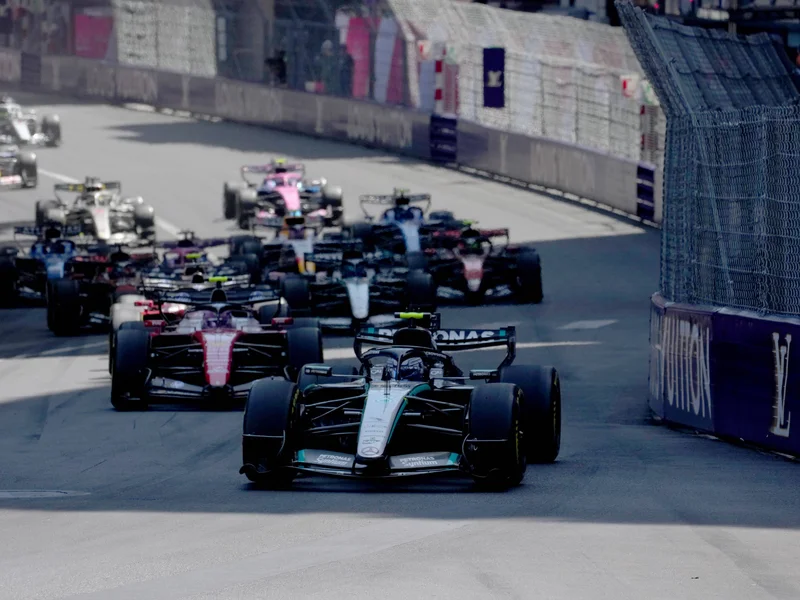
The French rookie endured a disastrous launch at the Spanish Grand PrixCompetition·Spanish Grand Prix, stalling twice and slipping nine places by the midpoint of the opening lap. From there he mounted an aggressive recovery, carving back through the field to rejoin the points-paying positions, but the pattern is now too familiar for one of Formula 1Competition·Formula 1’s front-running cars.
According to Sportal.bg, Hadjar links the issue to the team’s start procedure, which he describes as overly complex and unforgiving. Over the Barcelona weekend he repeatedly struggled to get the car off the line cleanly, and he regarded his getaway in Sunday’s race as the worst of them all. The engine cutting out twice on the grid underlined how narrow he feels the operating window has become.

This is not an isolated incident in Red Bull’s season. The same report notes that both Hadjar and team-mate Max VerstappenPlayer·Max Verstappen have lost significant ground in the opening metres at several rounds, despite having the pace to run at the front once up to speed. In Barcelona, the contrast is stark: the car is quick enough for Hadjar to overtake his way back into the top 10, yet the early damage leaves him racing in traffic and relying on recovery drives rather than controlling the race from the front.
The problem goes beyond a single poor reaction time. Hadjar points to the interaction between clutch bite point, torque delivery and driver inputs as an area where the team’s procedure demands near-perfect execution. In his view, the configuration leaves too little margin for human variability, especially under the pressure of a Grand Prix start when tyres, clutch temperature and track grip are all in flux.
Red Bull’s situation is particularly striking because their car performance is rarely in question. Hadjar’s charge through the pack in Barcelona, highlighted by a string of firm but fair overtakes, demonstrates that once underway he has the pace and race craft to compete in the leading group. The weakness lies in the first 200 metres, where repeated slow launches turn potential podium fights into damage limitation.
For a rookie, the dynamic cuts both ways. On one hand, these episodes expose Hadjar to intense scrutiny, with his mistakes amplified at the sharp end of the grid. On the other, his ability to reset mentally after a nightmare start and piece together a composed, attacking race underscores a notable level of resilience. Each comeback drive offers evidence of his underlying speed, even as the starting-phase errors and procedural demands continue to cost him track position.

From a technical standpoint, the Barcelona weekend adds another data point to a growing trend for Red Bull in 2026. Clean starts are becoming a differentiator at the front of the field, with rivals making gains in drivability and consistency off the line. If Red Bull’s launch system requires precision that borders on the robotic, as Hadjar suggests, then refining the process to give drivers a broader working window is likely to be a priority before the next rounds.
What comes next will be telling. The calendar now moves to circuits where grid position and start performance carry significant weight, and Red Bull can ill afford to continue handing away positions before the first corner. For Hadjar, the challenge is twofold: push for a more manageable procedure behind the scenes while cutting out the small mistakes that turn a difficult launch into a catastrophic one.
Barcelona therefore becomes more than just another resilient recovery in a rookie season. It is a case study in how a front-running team’s weakest phase of the race can repeatedly undermine its strongest asset: raw pace. If Red Bull can align their start execution with the speed Hadjar shows in race trim, his afternoons may soon be defined less by fightbacks and more by sustained pressure at the front.
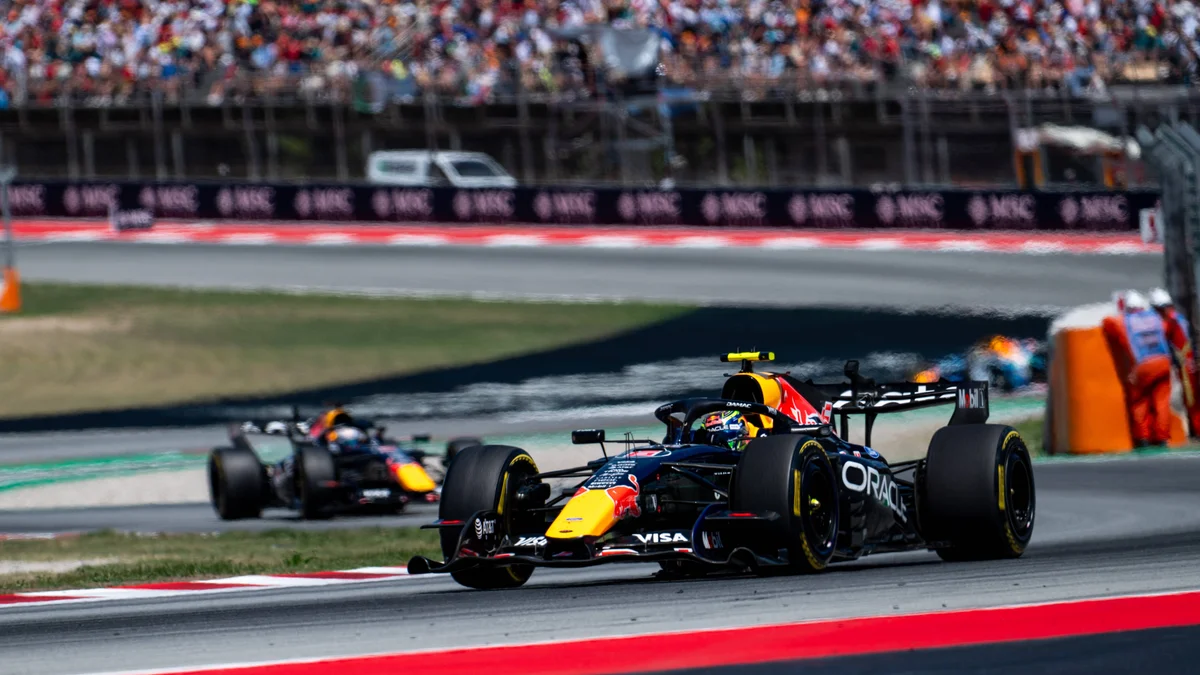
Isack Hadjar (06) leads Max Verstappen (03) in their Red Bull cars at the Barcelona Grand Prix. Eibner/IMAGO
Eibner/IMAGOThis article was generated by AI (sonar-pro). Learn more.