Jacques VilleneuvePlayer·Jacques Villeneuve has ignited debate over team hierarchy at Ferrari by arguing that the Scuderia must now build its 2026 title bid around Lewis HamiltonPlayer·Lewis Hamilton.
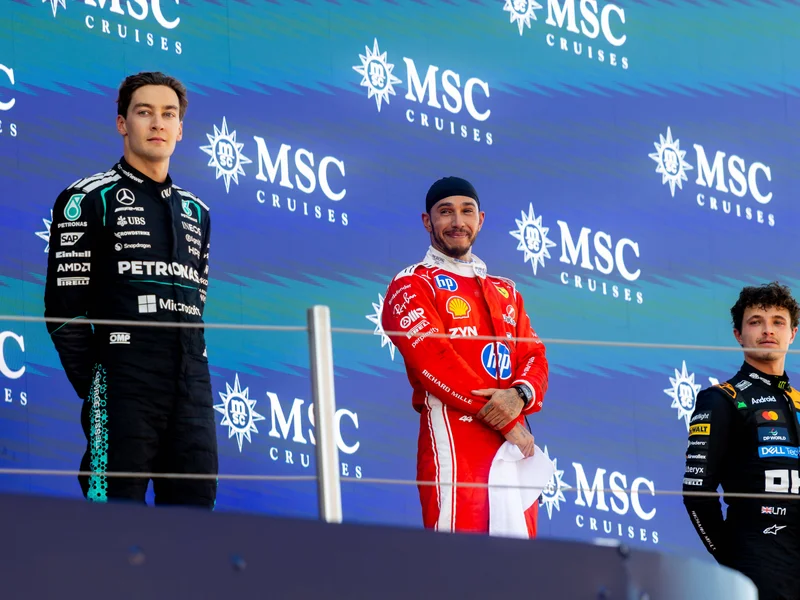
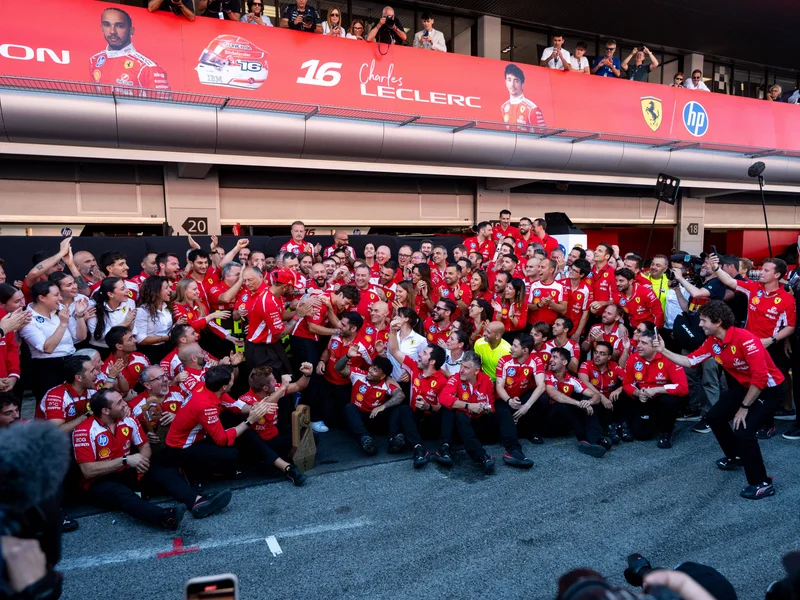
The 1997 Formula 1 world champion delivers his assessment in the wake of Hamilton’s first victory for Ferrari at the Circuit de Barcelona‑Catalunya, a result that has transformed the seven‑time champion from outsider to realistic contender in the drivers’ standings. The win in Spain cuts Hamilton’s deficit to overall leader Andrea Kimi AntonelliPlayer·Andrea Kimi Antonelli to 41 points, a gap that still demands consistency but is no longer prohibitive as the season approaches its midpoint.
Alongside Hamilton’s surge, Villeneuve points to the contrasting fortunes of Charles LeclercPlayer·Charles Leclerc. The Monegasque has endured a costly three‑race stretch, retiring or finishing outside the points in both Monaco and Barcelona after managing only fourth place in Canada. That run has dropped Leclerc to fourth in the championship, 40 points behind his team‑mate. In Villeneuve’s view, those numbers alter the competitive logic inside Ferrari’s garage.
For much of his Ferrari tenure Leclerc has been positioned as the organisation’s long‑term reference point, the driver around whom future title projects might be built. Villeneuve notes that Leclerc arrived in Maranello from SauberTeam·Sauber with expectations elevated by his raw speed and an early contract on terms befitting a prospective champion. He quickly outpaced then‑team‑mate Sebastian VettelPlayer·Sebastian Vettel, reinforcing the idea that Ferrari had found its new standard‑bearer even as the car itself fell short of sustained title contention.
Hamilton’s arrival has complicated that internal narrative. The Briton’s adaptation to Ferrari machinery was not immediate, and last season’s struggles at his previous team carried over into the early stages of his new chapter. Villeneuve underlines that top drivers often need time to shape an organisation around their working methods, and that during Hamilton’s adjustment period Leclerc looked comfortable in comparison.
Barcelona suggests that phase may be ending. With the car increasingly tuned to Hamilton’s preferences, Ferrari’s weekend in Catalonia showcased a driver operating within a package tailored to his style, and capitalising fully. Villeneuve frames this as a pivotal moment in the balance of power at Ferrari, arguing that once Hamilton senses a genuine shot at the championship he becomes exceptionally hard to dislodge.
The strategic question is whether Ferrari can afford to treat its drivers equally from this point on. In modern Formula 1, with tightly matched front‑running teams and limited testing, early clarity over team orders and development priorities can be decisive. Villeneuve contrasts Ferrari’s situation with that of MercedesTeam·Mercedes, where, in his view, the team is not in a position to favour one driver over another in the same way. Ferrari, by contrast, finds itself with one driver on an upward trajectory in the points and another searching for form just as the calendar enters a critical phase.
Prioritising Hamilton would have clear implications. In sporting terms it would mean tilting strategies, development choices and perhaps even on‑track calls towards maximising the 41‑point deficit to Antonelli, accepting that Leclerc’s own title aspirations are already heavily compromised. Politically, it would represent a rebalancing inside a team that has invested years in presenting Leclerc as its central long‑term project.
The wider paddock will watch Ferrari’s next moves closely, not least with the Austrian Grand Prix looming as the next opportunity to validate Barcelona’s evidence. A fan poll attached to the original report on Villeneuve’s comments highlights how fragmented expectations remain: support is spread across established names such as Max VerstappenPlayer·Max Verstappen, Lando NorrisPlayer·Lando Norris and Fernando AlonsoPlayer·Fernando Alonso, rising talents including Oscar PiastriPlayer·Oscar Piastri, Antonelli and Oliver BearmanPlayer·Oliver Bearman, and proven race winners like George RussellPlayer·George Russell, Sergio PérezPlayer·Sergio Pérez, Valtteri BottasPlayer·Valtteri Bottas and Pierre GaslyPlayer·Pierre Gasly. Hamilton features prominently among the favourites, but he is far from a consensus pick.
Within that competitive landscape, Villeneuve’s argument is straightforward: Ferrari has a narrow window in which to convert Hamilton’s Barcelona breakthrough into a sustained championship assault. Whether the team chooses to recalibrate its internal hierarchy around a late‑career Hamilton push, or to maintain parity and keep faith with Leclerc’s longer‑term arc, will shape not only the 2026 title race but the legacy of this driver pairing.
For now, the numbers lean towards Hamilton. The politics, as ever at Ferrari, are more intricate. What is clear is that every strategic call from Maranello in the coming weeks will be read through the prism of Villeneuve’s challenge: how badly does Ferrari want this championship, and which of its star drivers does it trust to deliver it.
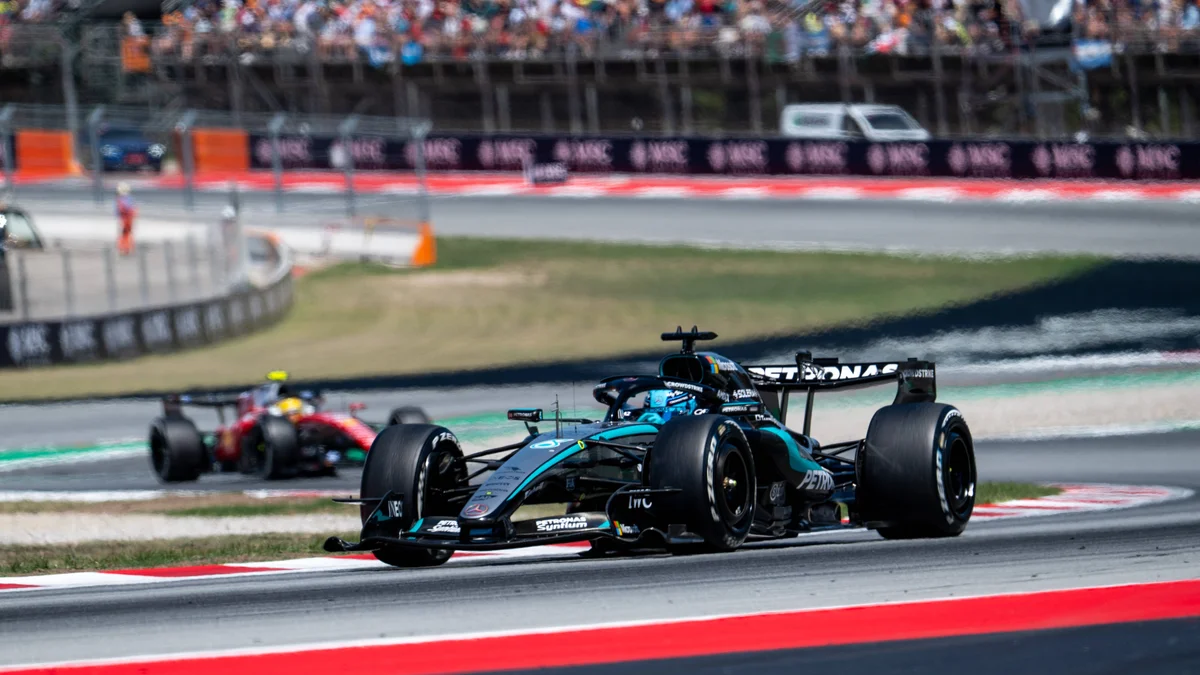
George Russell leads Lewis Hamilton during the 2026 Formula 1 Barcelona Grand Prix. Eibner/IMAGO
Eibner/IMAGOThis article was generated by AI (sonar-pro). Learn more.